
Electric cars cost more at the showroom than petrol cars. Yet, when buyers compare an electric car vs petrol car over five years, many discover that the electric option costs less to run. Lower fuel and maintenance bills are reshaping buying decisions in India and across global markets. Tesla says Model Y buyers in India can recover roughly one third of the purchase price through savings on fuel and upkeep within about five years. While the Model Y sits in the premium segment, the same electric car vs petrol car math increasingly applies to mass market EVs as well.
People think petrol cars cost less because the selling price is lower. That is true in most cases. Petrol cars today often start cheaper than their electric counterparts, partly because electric car batteries are expensive. But raw price is just one piece of the puzzle when comparing costs over five years.
Let’s dive into – Electric Car vs Petrol Car
Total Ownership Costs
The total cost of owning a car depends on several factors, including the purchase price, fuel or electricity costs, maintenance and service expenses, insurance premiums, and depreciation or resale value. These elements affect petrol and electric vehicles differently, with fuel and battery technology, tax policies, and state incentives playing a major role in shaping the final cost.
Purchase Price Gap
Petrol cars generally carry a lower price tag. For example, small petrol cars in India can cost several lakhs less than comparable electric cars. Government incentives such as lower GST on EVs (5 percent instead of 28 percent on petrol cars) can reduce this gap. But even after incentives, EVs often still carry a premium in 2025.
More Read

Fuel vs Electricity
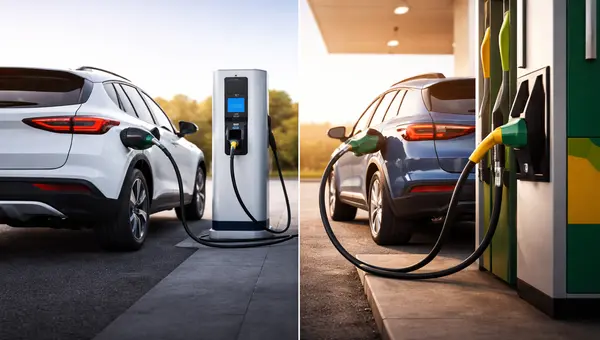
Petrol costs in India are high and volatile. Driving a typical petrol car 10,000 km a year can cost upwards of ₹80,000 in fuel alone. EVs charged mostly at home run on electricity at a fraction of that cost. Estimates show annual charging costs for an EV can be around ₹21,600. Over five years, that difference adds up to lakhs of rupees.
If you rely on public fast chargers at higher rates, the savings shrink but still favour EVs in many cases. The degree of savings varies with driving patterns, electricity prices, and how often rapid chargers are used.
Routine Maintenance
Petrol engines have many moving parts: oil systems, filters, belts and more. Service costs run higher because of regular engine checks and part replacements. Electric cars have simpler drive trains with fewer moving components. There are no oil changes and regenerative braking reduces wear on brakes. That can cut routine maintenance costs in half compared to petrol cars.
Even so, charging equipment and home electrical upgrades (like a 3-phase connection) add to EV costs for some owners. Tyres may wear faster on heavier EVs, and insurance can be slightly higher for newer electric models.
Depreciation, Resale, & Battery
Resale value remains petrol’s strongest defence. After five years, a well-maintained petrol SUV typically retains 55 to 60 percent of its original value. The used car market understands petrol engines, and buyers feel confident about long-term reliability. An ₹11 lakh petrol car can still fetch around ₹6.5 lakh.
Electric cars face perception challenges. Buyers worry about battery degradation. They also worry about future replacement costs. However, many batteries retain close to 90 percent capacity after five years. Rapid improvements in range also hurt resale. Newer EVs offering 500 to 600 kilometres make older 250-kilometre models less attractive.
As a result, five-year-old EVs often retain only 40 to 45 percent of their original value. A ₹16 lakh EV may fetch around ₹7 lakh. This higher depreciation offsets a significant portion of fuel and maintenance savings.
Five-Year Cost Equation
Real cost comparisons differ by model, state incentives, and your driving habits. One widely cited table shows this pattern for a hypothetical car running 1,000 km per month:
- Petrol car: total cost over five years roughly ₹11.4 lakh
- Electric Vehicle: total cost over five years roughly ₹10 lakh
The EV saves about ₹1.4 lakh over five years on total costs, even with a higher initial price.
Another analysis shows that if you drive less than about 12,000 km per year, petrol cars may still come out slightly cheaper when factoring insurance and purchase price. But as mileage climbs, the savings from electricity and lower service costs push EVs ahead.
Variables That matter
- Driving distance: Urban drivers with lots of short trips save more with EVs. Long highway runs reduce this advantage.
- Charging behavior: Home charging is cheapest. Frequent use of fast public chargers costs more but still often less than petrol.
- Model choice: The relative prices of specific petrol and EV models matter. More affordable EVs close to petrol price make savings easier.
- Fuel price trends: Petrol can be unpredictable. Electricity tariffs are usually more stable.
- Battery tech and lifespan: Older batteries lose capacity. Some owners may factor replacement costs after years of use. But many modern batteries last well beyond five years.
What Each Buyer
For a city driver doing regular daily commuting, EVs tend to pay off quicker thanks to cheap energy and low service costs. Buyers who rack up long highway miles should still do the math carefully, especially if they rely on high-cost public chargers.
Low-cost electric models that are close in price to petrol cars tilt the balance even more in favour of EV ownership. Petrol cars will remain appealing where charging infrastructure is scarce or if upfront budget is very tight.
Practical Guide
Compare the on-road price, fuel or electricity cost per kilometre, maintenance schedule, insurance quotes and expected resale values before you decide. Most city commuters who do around 10,000 to 15,000 kilometres a year will see electric cars cost less to own over five years.
Evaluate how you drive, where you charge and the realistic resale value for your model. That approach ensures you choose the car that fits both your budget and your daily life.